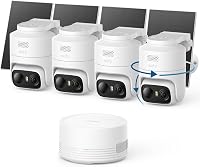
aosu D1 Max vs eufy SoloCam E42: Which Is Better? (November 2026)
The aosu D1 Max is the overall winner for most homes because it combines 4K video, local storage up to 1TB, detached solar panels and a 4-camera layout. Choose the eufy SoloCam E42 instead for HomeBase 3 storage expansion up to 16TB and its strobe-light deterrence.
On this page (13 sections)
- aosu D1 Max vs eufy SoloCam E42: quick verdict
- How the 2 solar camera kits compare
- Which kit gives you better outdoor coverage?
- Which system has the stronger night coverage?
- Which kit handles motion alerts better?
- How do local storage options change the choice?
- Which solar setup is easier to plan?
- How do the base stations and connections differ?
- Who should buy the aosu D1 Max?
- Who should buy the eufy SoloCam E42?
- What should you check before installing either kit?
- Final verdict: aosu D1 Max or eufy SoloCam E42?
- The decision rule is clear: aosu wins for overall balance and flexible placement, while eufy wins for storage scale and strobe-based deterrence. If you are comparing other wired systems too, our ZOSI vs ANNKE camera kit comparison covers a different setup style.
The aosu D1 Max wins the aosu d1 max vs eufy solocam e42 comparison for most homes. It pairs 4K video, 4 cameras, local storage and detached solar panels in one system, while the eufy SoloCam E42 is the better choice when HomeBase 3 storage expansion up to 16TB matters most.
Both kits target outdoor coverage without a camera power cable at each camera. The useful differences are storage design, base-station setup, deterrence features and how you plan the solar panels.
We compared the stated features and specifications rather than performance testing. The scores weigh those details against what someone shopping for a 4-camera 4K solar security system needs.


aosu D1 Max vs eufy SoloCam E42: quick verdict
Choose the aosu D1 Max for the best balance of coverage, storage and flexible solar placement. Its 4-camera kit includes 32GB built-in storage, expansion to 1TB, 4K Ultra HD video, full-color night vision and a detached panel for each camera.
The eufy SoloCam E42 takes the lead for long-term local storage. Its included HomeBase 3 starts with 16GB and expands to 16TB with a hard drive, giving it a much higher storage ceiling than the aosu system.
The aosu kit also has a clear advantage when you want a 4-camera plan for a typical single-family home. Its system description names the front yard, backyard, side yards and driveway as the coverage pattern.
Eufy answers with motion-activated red and blue strobe lights and a siren. That makes the E42 a strong match for someone who wants visible and audible deterrence in addition to phone notifications.
For a broader look at how the brands approach home security kits, read our aosu vs eufy comparison. This post focuses only on these 2 four-camera solar systems.
How the 2 solar camera kits compare
The aosu D1 Max is the simpler storage choice, while the eufy SoloCam E42 offers a much larger expansion path. Both deliver 4K video and use wireless outdoor cameras with solar power.
| Product | Best for | Video | Storage | Power | Our score |
|---|---|---|---|---|---|
| aosu D1 Max 4K Solar 4-Cam Kit | overall | 4K Ultra HD, 8MP, 15 frames per second | 32GB built-in, expandable to 1TB via Micro SD | Solar panels with 5200 milliamp_hours batteries | 9.1 |
| eufy SoloCam E42 4K Solar 4-Cam Kit | large local storage | 4K Ultra HD | 16GB built-in, expandable to 16TB with a hard drive in HomeBase 3 | SolarPlus 2.0 with removable solar panels | 9.0 |
| Feature | aosu D1 Max 4K Solar 4-Cam Kit | eufy SoloCam E42 4K Solar 4-Cam Kit |
|---|---|---|
| Cameras in kit | 4 | 4 |
| Video | 4K Ultra HD, 8MP | 4K Ultra HD |
| Night view | Full-color night vision and infrared | Motion-activated strobe light |
| Storage included | 32GB built-in aosuBase storage | 16GB built-in HomeBase 3 storage |
| Storage expansion | Up to 1TB via Micro SD | Up to 16TB with a hard drive in HomeBase 3 |
| Solar setup | 4 detached solar panels | 4 removable solar panels |
| Camera connection | Wireless cameras with Ethernet aosuBase | Wireless, with Wi-Fi protocol |
| Smart assistants | Amazon Alexa and Google Assistant | Apple HomeKit, Amazon Alexa and Google Assistant |
| Base station | 1 aosuBase | 1 HomeBase 3 |
The table shows why the overall decision is close even though the aosu score is higher. A 1TB local-storage ceiling is enough for many homes, but eufy's 16TB expansion option is far more suitable for a large archive or a setup built around continuous recording.
Which kit gives you better outdoor coverage?
Both systems give you 4 cameras, but the aosu D1 Max offers the clearer coverage plan for a standard single-family home. Its kit is designed around the front yard, backyard, side yards and driveway, which gives you a practical starting map.
The aosu cameras use pan, tilt and tracking to cover wide outdoor areas. Auto tracking follows people and vehicles in motion, while Panorama View lets you move to key areas from the app.
Cross-camera tracking adds another useful layer. The aosuBase can combine footage from multiple cameras into a continuous timeline, and clips are tagged and grouped for quicker review.
The eufy SoloCam E42 also has 360° protection, pan and tilt, AI motion detection and smart tracking. That gives it a strong fit for a porch, yard or driveway where movement through the camera view matters.
The deciding point is layout. Pick aosu when you want the kit's 4-camera purpose to guide placement around several sides of the property.
Pick eufy when your coverage plan is built around HomeBase 3 and tracked movement in each camera's view.
Which system has the stronger night coverage?
The aosu D1 Max wins for flexible night viewing because it combines full-color night vision with infrared mode. Its built-in spotlights provide color at night, while infrared offers a more discreet black-and-white view.
The stated 4K imaging uses 8MP resolution and 6× digital zoom. The system is designed to show faces clearly and read license plates from up to 33 ft, or 10 m, in the conditions described for the camera.
The eufy SoloCam E42 also records in 4K Ultra HD and recognizes license plates up to 33 ft, or 10 m, away. Its night deterrence centers on red and blue strobe lights, a siren and instant phone notifications when an intruder is detected.
That makes the difference easy to frame. Aosu suits you if the priority is choosing between color and infrared night views.
Eufy suits you if a strobe and siren are more useful than switching between 2 night-vision modes.
Neither result removes the need for careful camera placement. A light aimed at a reflective surface can affect what the camera sees, so point each unit toward the area you want to monitor rather than directly at a nearby wall or window.
Which kit handles motion alerts better?
The aosu D1 Max is the better pick for reducing alert clutter through on-device detection and activity zones. Its AI detects people and vehicles, while Smart Vehicle Guard watches parked vehicles and sends an alert when movement occurs nearby.
You can customize activity zones and trigger light and sound warnings. The camera and PIR motion sensors work together for human, vehicle and motion detection, according to the product information.
The E42 also uses AI to detect and track people, vehicles and important events. Its motion-activated strobe light adds a direct deterrence response when suspicious activity is detected.
Choose aosu when your main problem is separating people and vehicles from general movement. Its Smart Vehicle Guard is especially relevant if a driveway or parked car is one of the areas in your camera plan.
Choose eufy when the alert should be paired with a visible strobe and siren. The E42's strength is not only recognizing movement, but also giving that event a clear deterrence response.
How do local storage options change the choice?
Eufy wins the storage comparison by a wide margin, while aosu starts with more built-in capacity. The D1 Max includes 32GB in aosuBase and expands to 1TB through Micro SD.
The E42 includes HomeBase 3 with 16GB built-in storage. Its maximum expansion is 16TB with a hard drive installed in HomeBase 3, which is the stronger option for a large footage archive.
Storage is not only about the biggest number. A smaller home with event-based recording may prefer the aosu system's 32GB starting point and straightforward expansion to 1TB.
A household that wants continuous recording or a long archive should favor eufy. The E42 supports 24/7 recording in Direct Power Mode with a 5V/2A adapter and compatible cable, sold separately.
With HomeBase 3, a hard drive must be installed for that recording setup.
The eufy camera also supports a microSD card when connected to a router, but the microSD card is not included. For another 4-camera system comparison that focuses on a different brand pairing, see our eufy C37 review.
Which solar setup is easier to plan?
The aosu D1 Max gives you the more flexible panel arrangement because each solar panel is detached from its camera. That lets you place the panel for better sunlight while positioning the camera toward the area you need to cover.
The system description says 2 hours of direct sunlight keeps the system running year-round. Each camera has a 5200 milliamp_hours lithium-ion battery, and the kit includes 4 solar panels with brackets.
The eufy SoloCam E42 uses removable solar panels and SolarPlus 2.0 technology. Its product information also states that 2 hours of direct sunlight daily keeps the camera fully charged for continuous operation in any weather.
Solar power still depends on placement. A camera may face the right direction while its panel sits in shade, so plan the camera angle and panel location as 2 separate decisions when the design allows it.
Pick aosu for the most freedom between camera placement and panel placement. Pick eufy when a removable panel and HomeBase 3 fit the way you want to organize the system.
How do the base stations and connections differ?
The aosu D1 Max uses aosuBase with wireless cameras and an Ethernet connection to the base, while the eufy SoloCam E42 uses wireless connectivity with HomeBase 3 included. That difference matters when you plan the base station's location.
The aosu kit includes 1 aosuBase, an Ethernet cable and a power adapter. The base supports the camera network and stores footage locally, while the cameras connect wirelessly.
The E42 kit includes 1 HomeBase 3, 4 SoloCam E42 cameras, 4 removable solar panels, a charging cable and a power adapter. Its stated connectivity technology is wireless, with Wi-Fi listed as the connectivity protocol.
Both systems use an app for monitoring. Aosu lists Android and iOS compatibility, while eufy lists smartphone compatibility.
Place the base where its connection and power setup work with your home network. A good camera position does not help if the base station is tucked behind equipment or placed far from the connection point you intend to use.
Who should buy the aosu D1 Max?
Buy the aosu D1 Max if you want the strongest all-around 4-camera package for a normal home layout. It is the better fit for front, back, side-yard and driveway coverage with 4K video, local storage and separate solar-panel placement.
Its 4K Ultra HD image uses 8MP imaging, 6× digital zoom and 15 frames per second. Full-color night vision, infrared mode, pan, tilt, auto tracking and Panorama View give you several ways to monitor a wide outdoor area.
The 32GB built-in storage is higher than eufy's 16GB starting point. Expansion to 1TB keeps the system local and avoids a subscription requirement.
Aosu also suits homes that want vehicle-focused alerts. Smart Vehicle Guard watches parked vehicles, while on-device AI identifies people and vehicles to reduce irrelevant notifications.
The main reason to choose something else is storage scale. If 1TB feels too small for your recording plan, eufy's HomeBase 3 expansion makes the E42 the more suitable choice.
Who should buy the eufy SoloCam E42?
Buy the eufy SoloCam E42 if HomeBase 3 and storage expansion up to 16TB are central to your security plan. It keeps the 4-camera, 4K and solar setup while giving you a much larger local archive option.
The E42 includes HomeBase 3, 16GB built-in storage and support for expansion to 16TB with a hard drive. That makes it the better fit for a household that wants to keep more footage locally over a longer period.
Its AI motion detection and smart tracking follow people, vehicles and important events within view. The 360° coverage, pan and tilt help cover entry areas, a porch, a yard or a driveway.
Eufy also adds a motion-activated strobe light and siren. Red and blue strobe lights activate when an intruder is detected, and the system sends a phone notification.
Choose it when that combination of storage and deterrence matters more than the aosu system's 32GB starting capacity and detached-panel design. The E42 is the focused pick for large local storage.
What should you check before installing either kit?
Plan the 4 camera positions, base-station location and sunlight before you attach anything to the wall. The best setup gives each camera a useful view and gives each solar panel enough direct sunlight.
Start with the areas that need coverage most. For the aosu layout, that may be the front yard, backyard, side yards and driveway.
For either system, avoid placing a camera where a nearby wall fills most of the view.
Use the included mounting hardware that matches the kit. The aosu package includes camera brackets, solar-panel brackets, screw kits, positioning stickers and monitoring-area warning stickers.
The eufy package includes removable solar panels and the HomeBase 3 components listed above.
Keep the base station near the connection and power location you have planned. The aosuBase uses Ethernet, while the E42 uses wireless connectivity.
After installation, aim the camera at the area that matters and set the activity zone around that view. Solar panels need direct sunlight, so a shaded panel can undermine the benefit of a wireless outdoor camera even when the camera angle looks right.
Final verdict: aosu D1 Max or eufy SoloCam E42?
The aosu D1 Max is the overall winner in this aosu d1 max vs eufy solocam e42 matchup. Its 4K 8MP video, 4-camera coverage, 32GB local storage, 1TB expansion and detached solar panels make it the better balanced choice for most homes.
Choose the aosu D1 Max when you want broad outdoor coverage, full-color or infrared night viewing, vehicle-focused alerts and a simple local-storage plan.
Choose the eufy SoloCam E42 when HomeBase 3 is the priority. Its 16TB expansion ceiling, AI tracking, strobe light and siren give it the stronger case for a large local archive and visible deterrence.
The decision rule is clear: aosu wins for overall balance and flexible placement, while eufy wins for storage scale and strobe-based deterrence. If you are comparing other wired systems too, our ZOSI vs ANNKE camera kit comparison covers a different setup style.
Frequently asked questions
Do both camera kits include 4 cameras?
Yes. The aosu D1 Max and eufy SoloCam E42 are both 4-camera solar kits.
That makes them suitable for planning coverage around areas such as a front yard, backyard, side yards and driveway, with the exact layout depending on your home's shape.
Which kit has more storage?
The eufy SoloCam E42 has the larger maximum storage capacity because HomeBase 3 expands to 16TB with a hard drive. The aosu D1 Max includes 32GB and expands to 1TB through Micro SD, which is a smaller ceiling but still provides local storage without a subscription.
Can these cameras record without internet access?
The aosu D1 Max records directly to aosuBase, and its system description says recording continues if Wi-Fi is down. The eufy SoloCam E42 supports continuous recording with the required storage setup, including HomeBase 3 with an installed hard drive.
Which system is easier to place in a sunny area?
Both kits use solar power and removable or detached panels. The aosu D1 Max has detached solar panels with flexible placement, while the eufy SoloCam E42 uses removable SolarPlus 2.0 panels.
Place each panel where it receives suitable direct sunlight.
Do both systems work with smart assistants?
Both support Amazon Alexa. The aosu D1 Max also lists Google Assistant, while the eufy SoloCam E42 lists Apple HomeKit, Alexa and Google Assistant support in its product information.