What Is a PTZ Camera System, and When Is It Worth It?
A PTZ camera system uses cameras that pan side to side, tilt up and down, and zoom to change what they view. It can cover a wider area than a fixed camera, but coverage depends on its movement range and whether it can track motion automatically.
On this page (8 sections)
- What is a PTZ security camera?
- How does a PTZ camera work?
- Does PTZ mean the camera tracks people automatically?
- When is a PTZ camera system worth it?
- What should you check before choosing a PTZ kit?
- What are the tradeoffs of PTZ cameras?
- Which PTZ system fits a wired setup?
- What should you choose for your home?
A PTZ camera system lets you pan, tilt, and zoom to change the area a camera views. It may suit a large, open area where you need to aim a camera in different directions, but its movement doesn't keep every spot in view at once.
PTZ stands for pan, tilt, and zoom. Depending on the model, you may control those movements in an app or recorder, or a camera may track detected motion automatically.
What is a PTZ security camera?
A PTZ security camera is a motorized camera that can change its viewing direction and zoom level. “Pan” means turning horizontally, “tilt” means moving vertically, and “zoom” means narrowing the view toward a subject.
PTZ describes movement, not one standard set of features. A camera may offer app or recorder controls, preset viewing positions, or automatic tracking.
Check the features before assuming it will follow someone by itself.
A fixed camera points in one direction. It can keep a door, driveway, or gate in view without moving away, while a PTZ camera can be redirected to other areas.
How does a PTZ camera work?
A PTZ camera uses motors to turn and adjust its view. You can direct it with compatible app or recorder controls, and some cameras can move after detecting motion.
The range of movement varies by model. A camera may pan around much of its horizontal field and tilt up or down, but it still looks in one direction at a time.
A wall, tree, or building can block its view regardless of how far it rotates.
Zoom can help frame a distant area more closely, but it does not remove obstructions. If you need to identify people at a gate, consider the camera’s viewing angle and resolution alongside its zoom and movement features.
Does PTZ mean the camera tracks people automatically?
No. PTZ control and automatic tracking are different features.
A camera with pan and tilt may require you to move it in the app or recorder, while auto-tracking means it can follow detected motion on its own.
The Hiseeu 3K PTZ system supports pan and tilt control through its app or DVR, but it does not support humanoid tracking or automatic cruise control. Reolink says its RLK8-800PT4 camera can pan and tilt to track a target after motion detection.
Check for an explicit auto-tracking feature if tracking is a must-have. “PTZ camera” alone doesn't tell you whether movement is manual, automatic, or both.
When is a PTZ camera system worth it?
A PTZ system may suit a broad, open area where you need to aim a camera in different directions. It can be useful for monitoring a large yard, parking area, or other space where the area of interest may change.
It is less helpful when a camera must keep a specific spot in view at all times. While a PTZ camera faces another direction, it may miss activity at a door or gate.
A fixed camera can provide a steady view of that entry point.
For a home kit, think about how you will use movement day to day. If you only need a stable view of a few important spots, compare fixed-camera kits in our guide to home security camera systems.
What should you check before choosing a PTZ kit?
Check movement range, control method, tracking, recording setup, and cable requirements before choosing a PTZ system. These features determine whether the cameras fit your property and plans.
- Movement range: Compare the camera’s pan and tilt ranges with the area you want to watch.
- Control: Confirm whether movement works through the app, recorder, or both.
- Tracking: Look for an explicit auto-tracking feature if you expect the camera to follow motion.
- Recorder: Check the number of channels, recording options, and included storage.
- Cables: Note whether the kit uses PoE or BNC connections and whether cable runs reach your planned locations.
A recorder kit brings cameras and footage together, but setup depends on its connections and included cables. Our guide to how a home security camera system works explains how cameras, recorders, and viewing devices fit together.
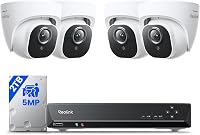
The Reolink RLK8-800PT4 is a wired PoE kit with 4 cameras, an 8-channel NVR, and a built-in 2TB hard drive. The drive is expandable up to 16TB.
The system works exclusively with Reolink PoE cameras. Local recording works without internet, while remote access requires it.
What are the tradeoffs of PTZ cameras?
PTZ cameras offer flexible aiming, but a moving camera cannot watch every direction at once. If it points away from a key entrance, another camera may be needed to keep that entrance in view.
Movement adds setup choices. You may need to set preset positions, learn the app controls, or decide which areas deserve priority.
A fixed camera can be simpler when you only need a steady view.
For many homes, a mix can make sense: fixed cameras for doors and gates, with a PTZ camera for an open yard. Read our comparison of PTZ and fixed security cameras to weigh those layouts.
Which PTZ system fits a wired setup?
The right PTZ kit depends on the recorder connection, resolution, and how you plan to direct the cameras. These examples show different wired options and features.
The Hiseeu 3K system includes eight 5MP cameras, an 8-channel DVR, and a 1TB hard drive. It supports app or DVR pan and tilt control, plus human and vehicle detection on up to 4 cameras.
The system supports local monitor viewing without a network connection. It does not support automatic tracking.
The Hiseeu 4K system includes eight 8MP cameras, an 8-channel DVR, and a 2TB hard drive. It supports app or DVR pan and tilt control, plus human and vehicle detection on up to 4 cameras, but not automatic tracking.
Both Hiseeu systems include BNC cables. Check cable lengths against your camera locations and the route back to the DVR before installation.
For more wired recorder options and setup context, see best NVR camera systems for a whole house. You can also compare PTZ-specific kits in our guide to the best PTZ security camera systems for home.
What should you choose for your home?
Choose PTZ if you need to redirect cameras across an open area and the control or tracking features match how you want to monitor it. Choose fixed cameras when important entry points need an uninterrupted view.
Check whether the camera moves automatically or only responds to your controls. Then match its movement range, cable type, recorder, and storage to your property.
If you need flexible aiming in a large yard, compare the best PTZ security camera systems for home; if you need a steady view of a door, start with a fixed-camera layout.
Frequently asked questions
What does PTZ mean on a security camera?
PTZ means pan, tilt, and zoom. A PTZ camera can move horizontally and vertically, and adjust its view to focus on an area.
Some models move by app or recorder control, while others offer automatic motion tracking.
Check the features because PTZ does not always mean auto-tracking.
Does a PTZ camera cover 360 degrees?
A PTZ camera may pan through a wide angle, but that doesn't mean it sees every direction at once. It points toward one area at a time, and walls or other objects can block its view.
Check the pan and tilt ranges, and plan for blind spots while it faces elsewhere.
Is a PTZ camera better than a fixed camera?
A PTZ camera can be aimed at changing areas, while a fixed camera keeps a steady view of one location. PTZ may suit a large open space that needs flexible coverage, but fixed cameras can be simpler for doors, gates, and other points that should stay in view.
Do all PTZ cameras automatically follow people?
No. Some PTZ cameras move only when you use an app or recorder, while others offer auto-tracking after motion detection.
Check the specific features: pan and tilt control alone does not mean a camera will follow a person on its own.