Best 4K Wireless Home Security Camera Systems: Top 9 Picks (November 2026)
The best 4K wireless home security camera systems include the Gianteye 2K Security Camera System for simple wire-free coverage, the Hiseeu Home Security Camera System for wide property coverage, and the aosu D1 Max 4K Solar 4-Cam Kit (best 4k wireless kit overall).
On this page (5 sections)
The best 4K wireless home security camera system for most homes is the aosu D1 Max 4-Cam Kit, with four true 4K solar cameras and a base station that stores footage locally without a monthly fee. The Gianteye 2K kit is the easiest to place thanks to its solar panels and pan-tilt cameras.
If you can run cables, the Reolink RLK8-800D4 gives the steadiest 4K feed of the group.
Wireless means different things from one kit to the next. Some run on solar panels and batteries, some connect over Wi-Fi but still plug into an outlet, and some send both power and data down one cable.
That difference decides how much work installation takes.
This guide compares the best 4K wireless home security camera systems for different homes. You'll see which kits are truly wire-free, which need an outlet per camera, and how each one stores footage.
For the wider picture of how these kits talk to your phone, our guide to how a home security camera system works covers the basics.
Our picks at a glance
-
1
 Best for simple wire-free coverage
Gianteye 2K Security Camera System
9.7/10 our score
See it on Amazon -
2
 Best for wide property coverage
Hiseeu Home Security Camera System
9.3/10 our score
See it on Amazon -
3

- 4
 Check it
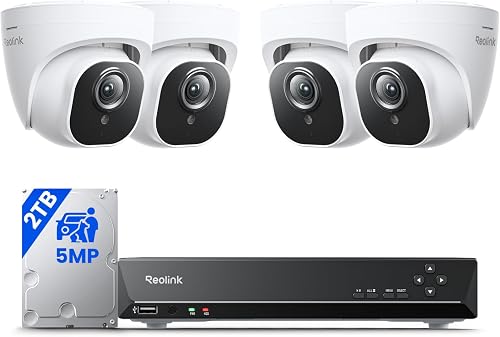
Reolink RLK8-800D4 4K PoE System
Best for dependable 4K recording - 5
 Check it
Reolink RLK8-520D4 5MP PoE System
Best for hearing what happens - 6
 Check it
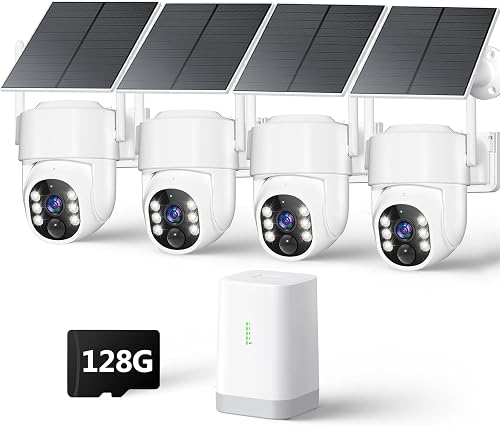
Vivideye 4MP Security Cameras Wireless Outdoor
Best for long battery life - 7
 Check it
ANNKE Wireless 4K NVR Dual-Lens Pan-Tilt Kit
Best for pan-tilt on a 4K NVR - 8
 Check it
Hiseeu 24/7 Recording 4K NVR Plug-In Kit
Best for round-the-clock recording - 9
 Best for renters and quick installsCheck it
The best 4K wireless home security camera systems for different homes
aosu leads for a real 4K picture without wires. The rest of the list covers homes that need more cameras, steadier recording or a simpler install.
Match the kit to your power situation before you compare features.
Gianteye 2K Security Camera System: Best for simple wire-free coverage
- 100% wireless solar and battery power
- 2K color night vision with spotlight
- 360° pan-tilt and IP65 weatherproof
- Dual-band 2.4GHz and 5GHz WiFi
Four solar cameras with pan-tilt control and human detection that install without an outlet or a cable run. The kit trades native 4K for easier placement.
Pros
- No outlets or cables needed
- Pan-tilt coverage from each camera
- 2.4GHz and 5GHz WiFi support
Cons
- 2K resolution, not 4K
- MicroSD card not included
Gianteye earns the top score for how little work it takes to get four cameras watching. Nothing plugs in: each camera runs on a solar panel with a backup battery, and the dual-band Wi-Fi link supports 2.4GHz for range or 5GHz for smoother live video.
Two hours of daily sunlight is enough to keep the panels topped up, and the backup battery covers cloudy stretches.
Its 2K picture is below the 4K kits here, but the 360° pan-tilt control on each camera lets one unit cover a wide area. The spotlight switches on color night vision when motion is detected, and PIR plus AI human detection filters out animals and moving branches.
Night vision reaches a long 328ft in starlight mode.
Storage is your choice: a microSD card in each camera or optional cloud, with no forced subscription. The card isn't included, so budget for one per camera.
Alexa support adds hands-free viewing on a compatible screen.
Choose it when placement matters more than the sharpest zoom. It suits renters and anyone who can't drill for power cables.
If you need to read a plate at 30ft, step up to a 4K kit.
Hiseeu Home Security Camera System: Best for wide property coverage
- 12 5MP cameras with a 4K NVR
- Pre-installed 3TB hard drive
- Expandable to 16 channels
- IP66 weatherproof
Twelve cameras and a 4K NVR with a 3TB drive cover a large home or small business in one kit. Every camera needs an outlet, so plan the wiring.
Pros
- 12 cameras in one kit
- 3TB drive for long recording
- Grows to 16 channels
Cons
- Cameras need outlet power
- Corded setup takes more planning
Hiseeu suits a large home or a small business that wants one kit to watch a lot of ground. Twelve 5MP cameras and a 4K NVR with a 3TB hard drive cover many angles, and the system grows to 16 channels.
The cameras connect to the recorder over 2.4GHz or 5GHz Wi-Fi, so you skip the video cable runs between camera and NVR.
The 3TB drive records continuously for more than 45 days in the maker's estimate. H.265+ compression halves the bandwidth compared with H.264, which helps when 12 cameras stream at once.
Local storage means no cloud fees.
The trade-off is power. Every camera plugs into an outlet, so "wireless" here means the Wi-Fi link between camera and NVR, not cord-free cameras.
If you have attic or soffit outlets near each mount, that's a quick job; if not, plan the wiring.
Cameras are rated IP66 and work from -13°F to 122°F. Pick this kit for scale and storage rather than for easy installation.
For a smaller cord-free start, the solar kits above make more sense.
aosu D1 Max 4K Solar 4-Cam Kit: Best 4K wireless kit overall
- Four 4K solar cameras with 8MP imaging
- 32GB local storage in the base, expandable to 1TB
- AI detection for people and vehicles
- 360° pan-tilt with auto tracking
A four-camera 4K solar kit that records to its own base station and needs no subscription. The detached solar panels let you aim each camera and its panel separately.
Pros
- True 4K on every camera
- Local storage with no subscription
- Cross-camera tracking in the app
Cons
- Base station adds one more device to place
- Local storage tops out at 1TB
aosu fits a typical single-family home that wants sharp 4K video without paying a subscription. The four cameras cover front yard, back yard, side yards and driveway, and each one pans, tilts and tracks people and vehicles on its own.
The 8MP sensor gives enough pixels to read a face or a plate, and the 6x digital zoom helps at the far edge of a view.
The 32GB base station storage is the part that matters most here. Footage records to the aosuBase rather than the cloud, so there's no monthly fee, and the base keeps recording even when Wi-Fi drops.
You can expand storage to 1TB with a microSD card.
Detached solar panels let you aim each panel at the best sunlight while the camera points where you need it. aosu says 2 hours of direct sun keeps the whole system running year-round. The trade-off against the NVR kits is that four cameras is the kit's starting point, and the base connects up to 6 cameras, while a wired NVR can grow much larger.
Buy it for true 4K without cables or fees. Look at a wired kit if you plan to add many more cameras later.
Reolink RLK8-800D4 4K PoE System: Best for dependable 4K recording
- Four 4K 8MP PoE cameras
- Pre-installed 2TB HDD
- Person, vehicle and animal detection
- Single cable per camera up to 330ft
A wired 4K kit that runs one cable to each camera for power and data. That cable makes installation harder but gives the steadiest feed and 24/7 recording.
Pros
- Reliable wired 4K feed
- 2TB drive included
- Recording works without internet
Cons
- Needs Ethernet cable runs
- Not a wireless system
Reolink's 4K PoE kit is the pick when you want a 4K picture that never stutters. Each camera takes one Ethernet cable that carries both power and data, so there's no battery to charge and no Wi-Fi dropouts.
The 8MP image gives about four times the clarity of 1080p, and the cameras run at 20fps for smooth playback.
The cable runs up to 330ft, which covers most houses from a central recorder. A pre-installed 2TB drive records 24/7, and you can add an external drive up to 8TB for backup.
Recording continues with no internet, since the NVR works locally.
Person, vehicle and animal detection cuts false alerts, and you can tell the system which type of motion should trigger a notification. Night vision reaches 100ft.
The kit expands to 8 Reolink PoE cameras, and only Reolink cameras are supported.
The catch is installation: you'll run cable through walls or along siding. That's more work than hanging a solar camera, but it's the most dependable 4K setup here.
Our guide to DIY PoE security camera systems walks through the cabling.
Reolink RLK8-520D4 5MP PoE System: Best for hearing what happens
- Four 5MP PoE cameras
- Built-in microphone on each camera
- 2TB HDD pre-installed
- Person, vehicle and animal detection
A 5MP wired kit with a microphone in each camera, so you get audio along with the video. It records around the clock to its 2TB drive.
Pros
- Audio recording built in
- 2TB drive included
- IP67 weatherproof cameras
Cons
- 5MP, below 4K
- Requires cable runs
Reolink's 5MP kit is the one to pick if sound matters. Each camera has a built-in microphone, so recordings carry audio along with the video, and you can listen in live from the app.
That audio can capture a conversation or a suspicious noise as well as the picture.
The 5MP picture is a step below 4K, though it still shows detail and reaches 100ft in the dark with infrared. It streams at 25fps, which is smoother than the 4K kit's 20fps.
The 2TB drive records 24/7 and holds about ten days of footage before it starts overwriting. An eSATA port takes an extra 8TB drive.
Person, animal and vehicle detection keeps alerts focused, and the cameras are IP67 rated for rain and snow, working from 14°F to 131°F.
Choose it over the 4K Reolink when audio recording matters more than the last bit of resolution. Both need cable runs.
For pan-tilt coverage without wires, our roundup of PTZ security camera systems is worth a read.
Vivideye 4MP Security Cameras Wireless Outdoor: Best for long battery life
- Four solar cameras with an 8000mAh battery
- 128GB local storage in the hub
- 360° pan-tilt with auto tracking
- Dual-band Wi-Fi 6
A solar kit with large batteries and 128GB of local storage in its hub. The 4MP cameras pan and track, but the resolution sits below 4K.
Pros
- Large 8000mAh batteries
- 128GB storage with no subscription
- Wi-Fi 6 dual-band support
Cons
- 4MP resolution
- Auto tracking is off by default
Vivideye suits a home that wants long battery life and plenty of local storage without a subscription. The 8000mAh battery and 5W solar panel keep each camera running on about 3 hours of sun a day, according to Vivideye.
Cameras arrive already paired to the hub, so setup is a matter of powering the base unit.
The 128GB hub storage covers up to 3 months of loop recording for all four cameras, and recordings stay in the hub even if a camera is damaged or lost. The 4MP picture gives color night vision up to 65ft with six LED lights, and Alexa can show the live feed on a compatible Echo Show.
Cameras pan and tilt through 360° and can track motion, though auto tracking is off by default and needs turning on in the app. Dual-band Wi-Fi 6 gives a faster link than older Wi-Fi.
The trade-off against the 4K picks is resolution: 4MP won't zoom as far. Choose it for storage and battery life first.
For more battery options, see our guide to the best wireless battery security camera system.
ANNKE Wireless 4K NVR Dual-Lens Pan-Tilt Kit: Best for pan-tilt on a 4K NVR
- Four dual-lens pan-tilt cameras
- 4K NVR with 1TB HDD
- 350° pan and 90° tilt with auto tracking
- 10-channel expandable system
Pan-tilt cameras on a Wi-Fi NVR, with each camera combining two 2MP lenses into a 4MP view. Cameras and recorder both need outlets.
Pros
- Pan-tilt with auto tracking
- 1TB drive included
- Expands to 10 channels
Cons
- Cameras need outlet power
- 4MP combined view, not 4K
ANNKE combines pan-tilt cameras with a 4K NVR and a 1TB drive. Each camera pairs a wide fixed lens with a moving PT lens, giving a 4MP combined view and 350° pan with 90° tilt.
Six built-in LEDs switch on full-color night vision when a person is detected, and night vision reaches 100ft.
Auto tracking follows movement, and up to 6 preset positions let you jump between key spots with a tap. AI human detection with PIR reduces alerts from leaves and animals.
The NVR holds a 1TB drive, grows to 8TB and supports up to 10 cameras.
The trade-off is that "wireless" here describes the Wi-Fi link only. Both the NVR and all four cameras need outlets.
The 4MP combined view also falls short of true 4K. The kit does include two-way audio through the camera's speaker and mic.
Choose it if you want pan-tilt cameras feeding a local NVR and you have outlets near each mount. Skip it if you can't add plugs or if 4K detail is the priority.
Hiseeu 24/7 Recording 4K NVR Plug-In Kit: Best for round-the-clock recording
- 4K NVR with four 3MP cameras
- 1TB HDD pre-installed
- 24/7 continuous recording
- Expandable to 10 channels
A small plug-in kit that records without gaps to its 1TB drive. The cameras are 3MP, so the 4K label comes from the recorder rather than the picture.
Pros
- No-gap 24/7 recording
- 1TB drive included
- Grows to 10 channels
Cons
- Cameras are 3MP
- Everything needs an outlet
Hiseeu's smaller kit suits a modest home that wants gap-free recording without a big spend. The 4K NVR records 24/7 to a 1TB drive, and you can switch to motion-triggered or scheduled recording when you like.
The kit connects cameras to the NVR over 2.4GHz or 5GHz Wi-Fi, with a rated installation distance of 100ft.
Four 3MP cameras cover the main entry points. The 4K label belongs to the recorder, so the picture itself is a step below the 4K camera kits here.
Night vision reaches 65ft, and IP66 housing handles rain and snow from -13°F to 122°F. Audio is listen-only, with no speaker to talk back.
Every camera and the NVR need an outlet. The Wi-Fi link saves you from running video cables, not power cables.
The system grows to 10 channels.
Pick it for simple, continuous recording in a house with easy outlet access. If you want sharper video or no cords at all, look at the solar kits or the Reolink 4K kit instead.
GMK 2K Wireless 4-Cam System: Best for renters and quick installs
- Four battery cameras with 2K video
- 3-minute setup with no cables
- IP65 weatherproof
- Optional plug-in power for busy spots
A battery kit you can hang in minutes without drilling for power. It runs on 2.4GHz Wi-Fi only and offers 2K video, so it suits small rentals more than big yards.
Pros
- Quick setup with no wires
- Battery or plug-in power
- Can stand on a flat surface
Cons
- 2.4GHz Wi-Fi only
- 2K resolution
- No 24/7 continuous recording
GMK suits renters and anyone who wants cameras up in minutes. The four battery cameras need no wires, and setup takes about 3 minutes with a screwdriver or even less when you stand them on a flat surface.
Each camera has a stable base for no-drill indoor use.
The 2K picture includes color night vision and a 110° field of view. You can talk through each camera and trigger a siren and flashing light to deter intruders.
Battery power lasts 1 to 6 months of standby, and busy spots can switch to plug-in power. A privacy sleep mode and custom schedules stop recording when you're home.
The limits are real: the kit runs on 2.4GHz Wi-Fi only, and it doesn't support 24/7 continuous recording because the built-in battery would drain. For local storage you add a microSD card up to 128GB, or use the included 7-day cloud trial.
You can share view-only access with family through the app.
Choose it for a small yard or apartment where drilling for power isn't an option. Look elsewhere if you need round-the-clock recording or 4K zoom.
How these 4K wireless kits compare
The table below lines up resolution, power and storage so you can see at a glance which kits are truly wire-free and which just connect by Wi-Fi. Read down the power column first, since that decides how much installation work each one needs.
| Product | Best for | Resolution | Power | Storage | Our score |
|---|---|---|---|---|---|
| Gianteye 2K Security Camera System | simple wire-free coverage | 2K | Solar panel plus backup battery | MicroSD or optional cloud | 9.7 |
| Hiseeu Home Security Camera System | wide property coverage | Plug-in corded | 9.3 | ||
| aosu D1 Max 4K Solar 4-Cam Kit | 4K wireless kit overall | 4K (8MP) | Detached solar panel plus battery | 32GB built in, up to 1TB | 9.1 |
| Reolink RLK8-800D4 4K PoE System | dependable 4K recording | 4K (8MP) | PoE over Ethernet | 2TB HDD, expandable to 16TB | 9.0 |
| Reolink RLK8-520D4 5MP PoE System | hearing what happens | 5MP | PoE over Ethernet | 2TB HDD, expandable to 16TB | 8.7 |
| Vivideye 4MP Security Cameras Wireless Outdoor | long battery life | 4MP | Solar panel plus 8000mAh battery | 128GB in the home hub | 8.6 |
| ANNKE Wireless 4K NVR Dual-Lens Pan-Tilt Kit | pan-tilt on a 4K NVR | 4MP per camera (2MP dual lens) | Plug-in corded | 1TB HDD, expandable to 8TB | 7.8 |
| Hiseeu 24/7 Recording 4K NVR Plug-In Kit | round-the-clock recording | 3MP cameras, 4K NVR | Plug-in corded | 1TB HDD | 7.6 |
| GMK 2K Wireless 4-Cam System | renters and quick installs | 2K (3MP) | Rechargeable battery or plug-in | 7.2 |
How we compared these kits
We scored each kit on the specs that decide daily use: picture resolution, how it gets power, how footage is stored, detection features and how far the system can grow. Kits that deliver real 4K on the cameras scored higher than kits whose 4K label comes only from the recorder.
Our score weighs specs, features and buyer feedback against what you're shopping for. A solar kit with no cables and no subscription ranks high for most homes, while a wired kit loses points for installation effort even when its picture is sharper.
Pan-tilt and audio features counted as useful extras, not replacements for a good base picture. Storage capacity and expansion limits also carried weight, since they set how long footage lasts and how far the system can grow without a full replacement.
Which 4K wireless kit fits your home?
The right kit depends on whether you can run cables and how much you want to pay each month. Answer those two questions and the shortlist narrows fast.
Is solar or plug-in power better for your home?
Solar wins when you can't reach an outlet at the mount, and it's the only truly wire-free option in this group. The aosu, Gianteye and Vivideye kits run on panels and batteries.
Cloudy winters shorten charging, so aim panels south and keep them clear of shade. A solar kit also suits a rental, because nothing needs to be wired into the house.
Plug-in kits like the Hiseeu and ANNKE systems need an outlet near each camera. That's fine if your soffits already have power.
PoE kits such as the Reolink pair go one step further and send power down the network cable, so only the recorder needs an outlet. If you're comfortable running cable once, PoE removes every battery and solar worry afterward.
How much does 4K detail actually matter?
4K gives you more pixels to zoom into, which helps identify a face or a plate at distance. The aosu kit claims plate reading from up to 33ft.
If your cameras watch a small yard or a doorway, 2K and 5MP kits show plenty of detail for less storage.
Higher resolution also fills a drive faster. A 4K kit needs more storage to keep the same number of days as a 2K kit.
The Hiseeu 12-camera kit answers that with a 3TB drive. The Reolink 4K kit's 2TB drive is expandable to 16TB if you want a long retention window.
Do you want local storage or a subscription?
Every kit here can store footage locally, and none forces a monthly fee. The aosu base holds 32GB and expands to 1TB.
Vivideye puts 128GB in its hub. The NVR kits ship with a drive from 1TB to 3TB.
The GMK kit is the one to watch here, since it leans on a 7-day cloud trial and needs a memory card for free local storage.
Local storage keeps working when the internet is down. Cloud storage adds off-site backup, but it usually costs money each month.
Start with local and add cloud only if losing the recorder in a fire or theft worries you. A base station or NVR placed out of sight is safer from a thief's reach.
How many cameras will you need?
Four cameras cover most single-family homes: front, back and two sides. The aosu kit is built around that layout.
If you have a long driveway or a detached garage, plan for more. Pan-tilt cameras help here, because one unit can sweep a wide area instead of covering a fixed slice.
The Hiseeu 12-camera kit suits large properties or small businesses. The Reolink 4K kit expands to 8 cameras, the Hiseeu NVR kits to 10, and the ANNKE kit to 10.
Solar kits grow more slowly: the aosu base takes 6 cameras and the Vivideye hub takes 4.
What should you check before you order?
Measure where each camera will go and note whether an outlet is within reach. Check that your Wi-Fi reaches the farthest corner, or plan a mesh node or the base station that comes with some kits.
A detached solar panel also lets you put the camera where the view is best and the panel where the sun is best.
Think about how long you want to keep footage. A 1TB drive holds fewer days of 4K than of 2K.
If you need a month or more, the 3TB Hiseeu kit or an expandable Reolink NVR fits better. Also check the weather rating: IP65 and IP66 handle rain and snow, while IP67 adds more water resistance.
The verdict on the best 4K wireless home security camera systems
For most homes, the aosu D1 Max 4-Cam Kit is the best 4K wireless home security camera system because it delivers true 4K on four solar cameras with local storage and no monthly fee. The Gianteye kit is the simplest to install if 2K is enough.
The Reolink RLK8-800D4 wins when you can run cable and want the steadiest 4K recording.
Pick by your power situation: solar and battery for zero wiring, Wi-Fi plus outlets for more cameras, or PoE for the most reliable feed. Whichever you choose, set up local storage first and test the alerts before you rely on the system.
Our top 3 picks at a glance
-
1
Best for simple wire-free coverage
Gianteye 2K Security Camera System
9.7/10 our score
See it on Amazon -
2
Best for wide property coverage
Hiseeu Home Security Camera System
9.3/10 our score
See it on Amazon -
3
Frequently asked questions
How much storage do I need for 4K cameras?
4K footage takes more space than 2K or 5MP, so plan for more storage or shorter retention. The kits here include drives from 1TB to 3TB, and some accept larger drives or memory cards.
More cameras and round-the-clock recording both shorten how long a drive lasts.
Do solar cameras work in cloudy weather?
Yes, if the battery holds enough charge. A solar panel tops up the battery on sunny days, and the battery covers nights and gray stretches.
The Gianteye kit needs about 2 hours of daily sunlight, while the aosu kit says 2 hours keeps the whole system running year-round.
Can I add more cameras later?
On the NVR kits, yes. The Hiseeu 12-camera kit expands to 16 channels, and the Reolink 8-channel kits accept more Reolink cameras up to their limit.
Solar kits vary: the aosu base connects up to 6 cameras, while the Vivideye hub supports 4.
What does 4K add over 2K or 5MP?
4K means about 8MP of picture, so you can zoom in and still read a face or a license plate. The aosu kit says its cameras read plates from up to 33ft away.
2K and 5MP kits cost less and use less storage, but give up some detail when you zoom.
Will a wireless 4K system work without internet?
Local recording keeps working without internet on kits that store footage in a base station or NVR. Remote viewing on your phone needs an internet connection.
The Reolink PoE kits record locally with no internet, and the aosu base records even when Wi-Fi is down.


