Arlo vs Blink Security Cameras: Which Is Better? (November 2026)
Pick Arlo for brighter night video and a floodlight camera in one unit; pick Blink for cheaper plug-in and battery cameras that are easy to place. In this arlo vs blink security cameras comparison, the higher-scored Arlo wireless floodlight is the best all-round pick for most buyers.
On this page (11 sections)
- Arlo vs Blink security cameras: the short answer
- Arlo vs Blink cameras side by side
- Which brand has better video quality?
- Which brand is better at night?
- Which system covers more of a home?
- Which brand is easier to set up?
- Which storage and subscription plans fit you?
- Which brand has better battery life?
- Who should buy Arlo?
- Who should buy Blink?
- Verdict: which brand wins?
Pick Arlo for brighter night video and a floodlight camera in one unit; pick Blink for cheaper plug-in and battery cameras that are easy to place. The Arlo wireless floodlight is the best overall pick in this arlo vs blink security cameras matchup, while Blink wins when you want simple coverage at a lower cost.
The two brands aim at different buyers. Arlo leans toward feature-rich outdoor cameras with built-in lighting.
Blink focuses on small, easy-to-install cameras that work well with Alexa and a single app.
This comparison covers video quality, lighting, storage, battery life and setup, so you can choose the brand that matches your home.


Arlo vs Blink security cameras: the short answer
Arlo wins for most buyers because its floodlight camera does more in one device. It records 2K HDR video and lights the scene with up to 3000 lumens, so one unit handles both jobs on a driveway or back gate.
Blink is the better value for indoor rooms and simple outdoor spots. The Mini 2K+ plugs in and starts recording in minutes, and the Outdoor 4 bundle covers a door and five cameras without much fuss.
If your priority is clear night footage of faces and cars, go Arlo. If your priority is getting several cameras up quickly and cheaply, go Blink.
For a deeper look at Blink against another budget brand, see our Blink camera vs Wyze camera comparison.
Arlo vs Blink cameras side by side
The table shows where each brand puts its strengths. Arlo centers on outdoor video and lighting, while Blink spreads its range across indoor and outdoor cameras.
| Feature | Arlo | Blink |
|---|---|---|
| Best-known strength | Floodlight cameras and 2K HDR video | Simple plug-in and battery cameras |
| Video | 2K HDR with 160° view | 2K on Mini 2K+, 1080p on Outdoor 4 |
| Night lighting | Built-in floodlight up to 3000 lumens | Night vision only |
| Power | Rechargeable and swappable batteries | Plug-in or AA lithium batteries |
| Smart alerts | Person and vehicle detection on a plan | Person and vehicle detection on a plan |
| Hub | No hub needed for single cameras | Sync Module Core in the bundle |
| Voice control | Alexa, Apple Home, Google Home | Alexa |
The short version: Arlo gives you more per camera, and Blink gives you more cameras for the money. Neither brand forces a subscription for basic live view and alerts.
Which brand has better video quality?
Arlo has the edge on paper because it pairs 2K HDR video with a wider field of view on its outdoor models. The floodlight camera captures 2K HDR at 160 degrees.
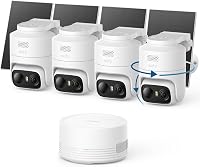
The Arlo Pro 6th Gen kit uses the same 2K HDR and 160-degree view across four cameras. That consistency helps when you want footage from different angles to look alike.
Blink is mixed. The Mini 2K+ records 2K video with up to 4x zoom and improved audio.
The Outdoor 4 cameras in the bundle record at 1080p, so the doorbell's 2K view is sharper than the outdoor cameras around it.
HDR matters most when a scene has both bright and dark areas. A driveway with sun glare and deep shade is the classic case, and Arlo's HDR helps hold detail in both.
Blink's 1080p outdoor cameras still show faces and deliveries, but the image is smaller when you zoom in.
Which brand is better at night?
Arlo wins at night because its floodlight camera adds light instead of relying on sensors alone. The unit puts out up to 3000 lumens and records color night vision, so you can see the color of a shirt or a car.
Blink cameras use standard night vision. They work in the dark, but without a built-in floodlight, a face at the end of a driveway is harder to identify.
You can add separate lighting, but that means another device and another app.
The Arlo floodlight also doubles as a motion-triggered light for the yard. That is useful when someone walks up at night and you want the area lit before you check the app.
If your camera sits under a porch light already, Blink's night vision is fine. If the area is pitch black, Arlo's light is the difference between a clear clip and a grainy one.
For more on how camera type changes coverage, read PTZ vs fixed cameras.
Which system covers more of a home?
Blink's bundle covers more spots for the money, while Arlo's kit covers fewer spots with richer video. The Blink Outdoor 4 and Wired Doorbell 2K+ bundle includes five Outdoor 4 cameras, a 2K+ doorbell and a Sync Module Core.
Five cameras let you watch a front door, a back door, a side gate, a garage and a shed. One hub and one app keep the system tidy.
The trade-off is 1080p video on those outdoor cameras.
The Arlo Pro 6th Gen kit has four 2K HDR cameras. Four cameras cover the main entry points of a typical house, and each records sharper video.
The floodlight camera is sold on its own, so you can add lighting where it matters most.
Count your coverage gaps first. A large yard with several outbuildings favors Blink's five-camera bundle.
A smaller yard where each view needs to be clear favors Arlo. For another brand comparison in the same space, see eufy vs Blink.
Which brand is easier to set up?
Both brands are DIY-friendly, but Blink's plug-in camera is the simplest first install. The Mini 2K+ plugs in, connects over Wi-Fi and mounts with the included stand and kit.
Setup takes minutes and needs no hub for a single camera.
Arlo's floodlight camera installs with screws and runs on a rechargeable battery. There is no wiring to the house, but the dome body needs a solid mounting surface because it is heavier than a small plug-in cam.
Plan the spot so the light points where you want it.
Blink's outdoor bundle adds a Sync Module Core. The hub connects the cameras to your Wi-Fi.
That is one extra box to place and power.
Arlo's cameras connect directly to Wi-Fi. The Pro 6th Gen kit supports Dual-Band Wi-Fi and picks the stronger 2.4 or 5GHz signal automatically.
That helps in homes where the 5GHz band reaches the yard.
If you want the fastest path from box to live view, Blink wins. If you are mounting high on a garage and want fewer wires, Arlo's battery design is easier to live with.
Which storage and subscription plans fit you?
Both brands give you basic live view and alerts without a plan, but smart detection and longer history need a subscription. That is the main cost decision in this arlo vs blink security cameras matchup.
Arlo includes a trial of its Secure plan. After it ends, the plan adds 60-day video history, AI detection and emergency response.
Without it, you keep live streaming and basic motion alerts.
Blink's plan adds person and vehicle detection and Blink Moments, which stitches clips into one video. A free 30-day trial is included with the Mini 2K+.
Without a plan, you still get live view and basic motion alerts.
Budget for the plan you actually want. A single Blink camera can run with no monthly cost for basic alerts.
An Arlo setup with smart detection across four cameras needs the plan to get the most from it. Our aosu vs eufy comparison shows how another pair handles its storage setup.
Which brand has better battery life?
Blink advertises longer battery life on its outdoor cameras, while Arlo uses swappable rechargeable batteries. Blink says the Outdoor 4 runs up to two years on the included AA Energizer lithium batteries.
Arlo's floodlight and Pro cameras use a rechargeable lithium-ion battery. You charge it and put it back, or swap in a spare and keep recording.
The Pro 6th Gen has a removable battery and a low power mode to stretch time between charges.
Two years versus a few months is a real gap. Blink's cameras do less per charge because they lack a floodlight and record at 1080p.
Arlo's brighter camera draws more power, so shorter battery life is the trade-off for better night video.
Cold weather cuts battery life on both brands. If you live where winters are harsh, plan to recharge Arlo batteries more often and keep spare AA lithium cells for Blink.
Who should buy Arlo?
Buy Arlo if night video quality and built-in lighting matter more than covering many spots cheaply. The floodlight camera is the pick for a driveway, alley or large yard where you want light and a clear 2K picture.
Choose the Arlo Pro 6th Gen kit if you want four matching cameras across the front and back of a house. The swappable batteries and Dual-Band Wi-Fi make it easier to keep the system running without wiring.
Skip Arlo if you need five or more cameras on a tight budget. The higher cost per camera and the paid plan for smart detection add up.
A buyer who wants a simple indoor camera for a nursery or hallway will pay for features they don't use.
Arlo also suits someone who already uses Apple Home or Google Home. The cameras list those controllers along with Alexa and SmartThings.
For a closer look at how Arlo compares in multi-camera kits, our aosu vs eufy piece covers a similar decision.
Who should buy Blink?
Buy Blink if you want several cameras up fast and a simple app that works with Alexa. The Mini 2K+ is the easy first camera for a living room, hallway or garage, and the 2K picture is sharp for the size.
Choose the Outdoor 4 and Wired Doorbell 2K+ bundle if you want to cover a front door and five outdoor spots in one purchase. The Sync Module Core and the two-year battery life keep upkeep low.
Skip Blink if your main camera will watch a dark driveway. The lack of a built-in floodlight means night clips are less clear than Arlo's.
A buyer who wants one strong camera with light should pay more for Arlo.
Blink also makes sense for renters. The plug-in Mini needs no drilling beyond the mount, and the battery cameras move with you.
Compare it with another budget brand in our eufy vs Blink matchup.
Verdict: which brand wins?
Arlo wins this arlo vs blink security cameras comparison for most buyers, thanks to the floodlight camera's 2K HDR video and up to 3000 lumens of light. If you want one camera that lights and records a driveway, the Arlo wireless floodlight is the clear pick.
Pick Blink when coverage count and simplicity matter more. The Mini 2K+ is the best indoor plug-in camera here, and the Outdoor 4 bundle is the easiest way to cover a whole property without a big spend.
A simple rule: choose Arlo for the darkest, most important view on your property. Choose Blink for the other spots where a 1080p clip and a two-year battery are good enough.
For camera type and coverage questions, the PTZ vs fixed cameras guide helps you plan each view before you buy.
Frequently asked questions
Is Arlo or Blink better for home security?
Arlo is the better fit when you want brighter night video and floodlight cameras that light a driveway. Blink wins on simplicity and price for indoor plug-in cameras and small outdoor setups.
For most homes, the Arlo wireless floodlight is the single best pick because it combines light and a 2K camera.
Do Arlo and Blink cameras need a subscription?
Both brands sell optional plans. Arlo includes a trial of its Secure plan, and after it ends, live streaming and basic motion alerts still work without paying.
Blink cameras also work without a plan for live view and basic alerts, but person and vehicle detection sits behind a paid plan.
Can Arlo and Blink cameras work with Alexa?
Yes. Arlo cameras list Alexa, Apple Home and Google Home as controllers, and Blink cameras work with Alexa-enabled devices for live view and arming.
Check each model's app page before buying if voice control is a must for your setup.
Which brand has better night vision?
Arlo has the edge here because the floodlight camera adds up to 3000 lumens of light plus color night vision. Blink cameras rely on their own night vision without a built-in floodlight.
For a dark driveway, the extra light from Arlo makes faces and plates easier to see.
Is Blink cheaper than Arlo?
Blink is usually the more budget-friendly brand, and its plug-in Mini 2K+ costs less than an Arlo floodlight camera. Arlo charges more for the built-in floodlight and higher-end features.
Compare the total cost of cameras plus any plan you want, not just the first camera.
How long do the batteries last on each brand?
Blink says its Outdoor 4 cameras run up to two years on the included AA lithium batteries. Arlo uses a rechargeable lithium-ion battery and sells spare batteries for swapping.
Actual life depends on how often the camera records and how cold it gets.